
Email:edu@educationrefinement.online
Find us:1142 S. Diamond Bar Blvd, Diamond Bar, CA , 91765, US
Email:edu@educationrefinement.online
Find us:1142 S. Diamond Bar Blvd, Diamond Bar, CA , 91765, US
Education Refinement
Are you thinking about going back to school? As practitioners, we often have this in the back of our minds. You see advertisements for continuing education opportunities and wonder if this dream can become a reality. Or you might be strongly encouraged to take courses as part of your employer’s professional development plan.
Most of us have to juggle our family lives, full-time employment, and any volunteer work; it is scary to think about adding school to the mix. Having been out of school for a few years, you wonder if you would be able to start over again. As a mature student, you would have a lot more to learn than just the curriculum. Not only will you have to teach yourself how to study again, but you’ll also face the challenges—technological, among others—of studying in the 21st century. There are many options available to suit your schedule, but you need to decide which one will work best for your family and your learning needs.
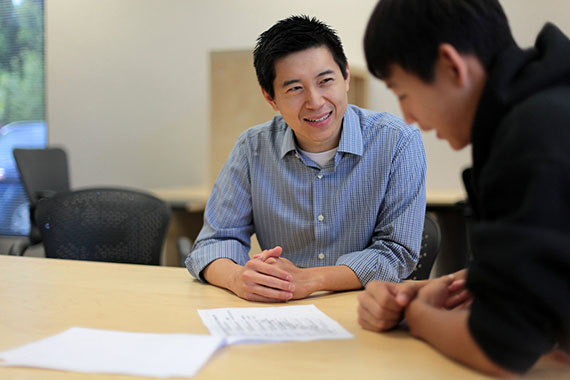
Professors share their knowledge and understanding of a subject in various ways. Some concepts might be quite clear to you, but others, not so much. One graduate’s advice is to not be afraid to ask questions. (Before asking, review the course material to ensure that it does not already give the answer—for example, when is the midterm?) If you’re stuck on a question or concept, don’t spend a lot of time on it; go on to the next one, and then ask for help as soon as you can. Remember, the material is new to your classmates, as well, so in addition to talking to them, ask the expert.
Professors have office hours set aside each week for helping students. This is a good time to clarify information or to ask questions you are uncomfortable asking during class. Successful students meet with their professors early in the term and return on a regular basis. Another way to communicate with your instructor is via email. Before emailing your professor, check your syllabus and notes to see if you already have the information you need. Use a clear, informative subject line, such as “First assignment for Communications 101.” Begin with an appropriate salutation, as you would in a letter. You are not writing an informal text message; therefore, greet your professor by name and title to show respect. Do not use emoticons or i instead of I. Professors receive a lot of correspondence, so be concise and politely explain why you are writing. Sign your email using both your first and last names so the professor can identify you and provide an appropriate response. To ensure that your email does not contain any spelling or grammatical errors, do not forget to edit it before hitting Send. (There are many editing tools, such as Grammarly or Ginger, for reviewing your written work. For example, if you make a mistake with the word there, these tools will tell you the difference between there, their, and they’re.)
Check to see whether your school provides students with agendas, or if you prefer, use the calendar on your phone to keep yourself organized. In our experience, successful students schedule time to study in fixed blocks during the week, in addition to the time they spend in class. One way to reduce your stress level is to organize your assignment due dates. When the professor distributes the course syllabus, immediately add all deadlines to your calendar. You can then create your own time line, including the steps you need to take to complete an assignment. For example, if a paper is due on the 30th of the month, you might want to start your research no later than the 10th, write the rough draft by the 20th, and finish the final draft by the 25th. That way, you have time to reflect on the assignment and are not in a rush to complete it the night before. Be realistic when creating your time lines for assignments, and consider technology carefully. Do you really have time to learn how to use Prezi software, for example, and also research and write your presentation?
To be successful as a student, you will probably need to sharpen your study skills. During the week, establish a schedule that enables you to focus on your course work outside of class. One of our students uses her lunch breaks to study and complete course work. Another is on her computer at 5:00 a.m., before she goes to work.As is often true with children, many adult students learn material better when they engage with content in multiple ways. After reading and listening, for example, you might want to create a picture or diagram, write the material out in your own words, or ask a friend to quiz you on the material.Typically, the first class in a course is critical—it lays the foundation for the rest of the term. This is when the professor explains in detail the syllabus and his expectations for students. If you arrive at least five minutes before class starts, you can prepare yourself physically and mentally. Choosing to sit near the front of the class helps reduce distractions.
One way to relieve stress is to take control of your situation. Make time to take care of yourself, even though you are busy. To be at your best, get seven to eight hours of sleep every night, drink a lot of water, and get regular exercise. If you do not already have a support system, it is important that you create one. It can be your significant other, family, friends, or colleagues. Surround yourself with positive people who are willing to help you reach your goals. Talk to them about what you are learning. Remember that you are a role model for the families and the children in your care. You are showing them that education is important and that you value lifelong learning, hard work, and determination.
Many colleges have professional support services for students. They can range from medical care and counselling services to tutoring supports, academic accommodations, and advocacy. We encourage you to access these services—on an individual basis or by signing up for a workshop. In addition to benefitting from these services, find time for yourself and take a break from all of the action. One strategy that is gaining in popularity is mindfulness—the awareness that emerges from paying attention to the present moment (Greater Good Science Centre 2017). Here is how it works.
In college, learning and success require much more than doing only what is necessary to get by. Benjamin Bloom, an educational psychologist, created a taxonomy of educational objectives. Many professors consult this taxonomy when designing their courses. The following summary builds on Bloom’s work (and on more recent cognitive science) to provide tips for maximizing your learning (Anderson & Krathwohl 2001).
Be they online or face-to-face, many higher education options are available to suit your schedule and learning needs. Not only will adding to your credentials deepen your knowledge, it might even reignite your passion for the profession and open doors to new career opportunities. We believe that our tips will help you succeed because we have seen them work in our in-person and online classrooms. Take it from one of our students who earned an early learning child care diploma in 2016.
I was successful because I loved what I was learning, and I was eager to succeed in my field. I broke down my assignments and used time management to make them seem like less of a task. Reliable teachers and fellow students were a great help, as well as prioritization and making sure that I took breaks and had time to relax.